
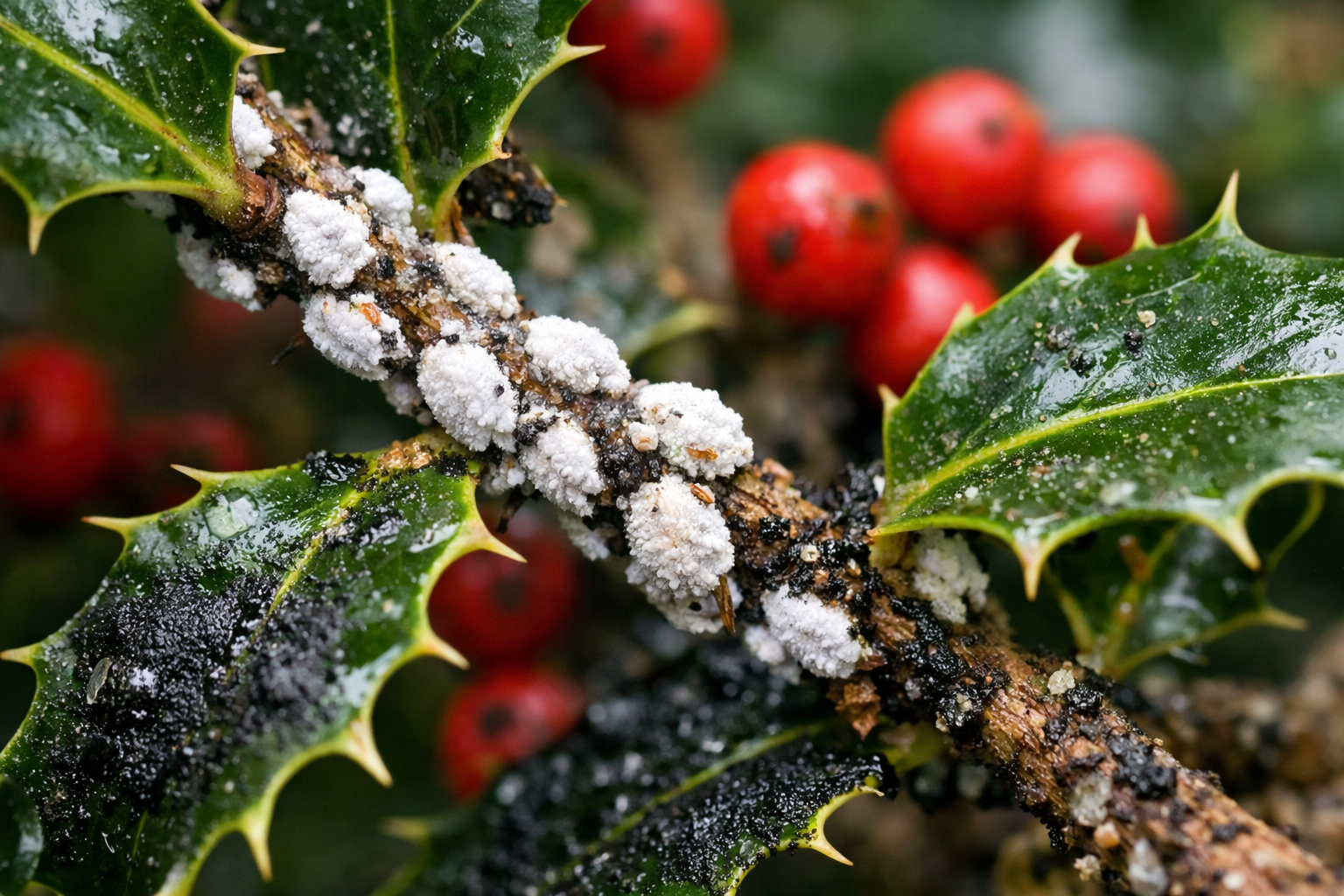
For your trees and shrubs, one of the most important and environmentally friendly applications of the year is being done now! Dormant oils are one of our best tools against the unwanted pest population in your landscape shrubs. Insects such as scale, mites, and aphids have laid eggs on many of our shrubs in the mid-south and will soon hatch into larva. In order to greatly reduce this population, we apply dormant oils. Dormant oils are refined petroleum products designed to be sprayed on trees and shrubs. They will smother the future larva by covering their spiracles (breathing tubes). These applications are not toxic to birds or mammals.
Things to know before applying dormant oils:
- Dormant oils should be applied in temperatures above freezing, but below 70 degrees. Applications when temperatures are too low can lead to winter damage to plants. Applying dormant oils when the temperatures are too high will cause the oil not go into solution properly and your coating of the shrubs will not be thorough.
- Plants need to be completely dormant and before new growth occurs to prevent damage to the plants.
- Avoid applying simultaneous applications of dormant oils and insecticides containing sulfur. The mixing of the two can cause a dangerous compound. You must time these applications three to five days apart.
- Check your label to avoid shrubs that should not be sprayed by dormant oils.
- Dormant oils can do damage to annual flowers, so avoid spraying them.
As mentioned before, the insects that are managed by dormant oil applications are scale, mites, and aphids. Some common plants in Memphis that are affected by these insects are crepe myrtles, hollies, euonymus, boxwoods, roses, and other evergreens.
Soft-Bodied Scale on Crape Myrtles: What Homeowners Need to Know
One of the most damaging pests affecting crape myrtle trees in West Tennessee is soft-bodied scale. This invasive insect was introduced to the United States through imported ornamental plants and has become a serious problem in residential landscapes.
Soft-bodied scale insects feed by sucking sap from the tree. When populations grow large, they can weaken the tree, slow growth, and in severe cases, cause dieback or plant death.
How to Identify Soft-Bodied Scale
Homeowners often notice:
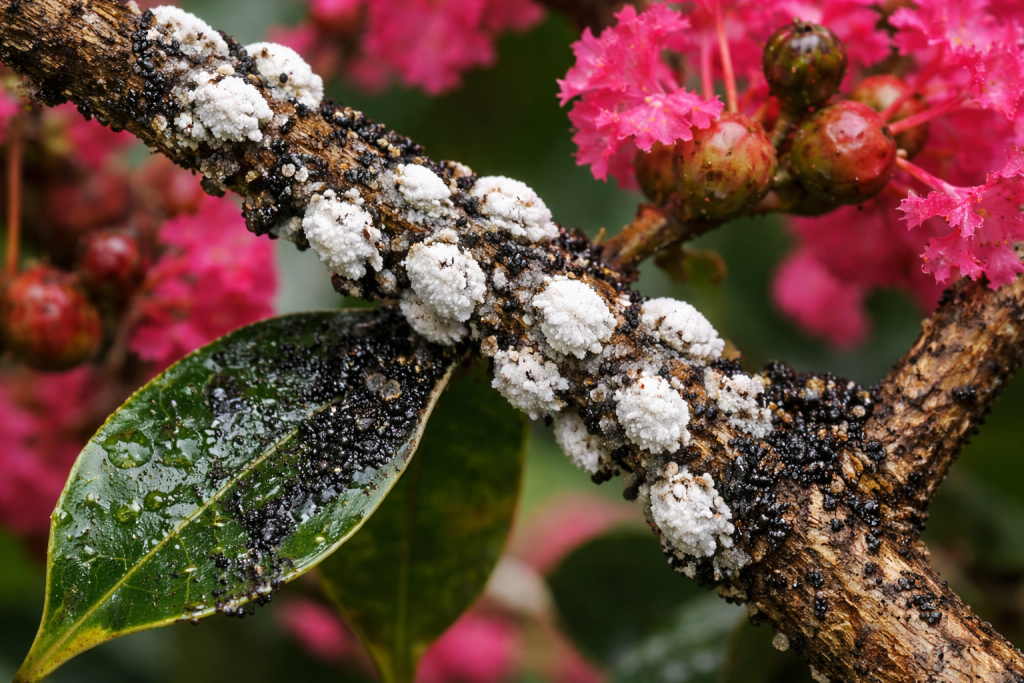
White, fuzzy patches on the bark or branches
Sticky residue (honeydew) on leaves or surfaces below the tree
Black coating on leaves, nearby plants, patio furniture, or sidewalks
The sticky honeydew allows a black fungus called sooty mold to grow. Once established, sooty mold cannot be easily washed off and creates an unattractive, dirty appearance around the tree.
Why This Pest Is a Problem
Reduces tree health by draining nutrients
Promotes sooty mold growth
Creates mess on outdoor furniture and hardscapes
Spreads easily to nearby plants
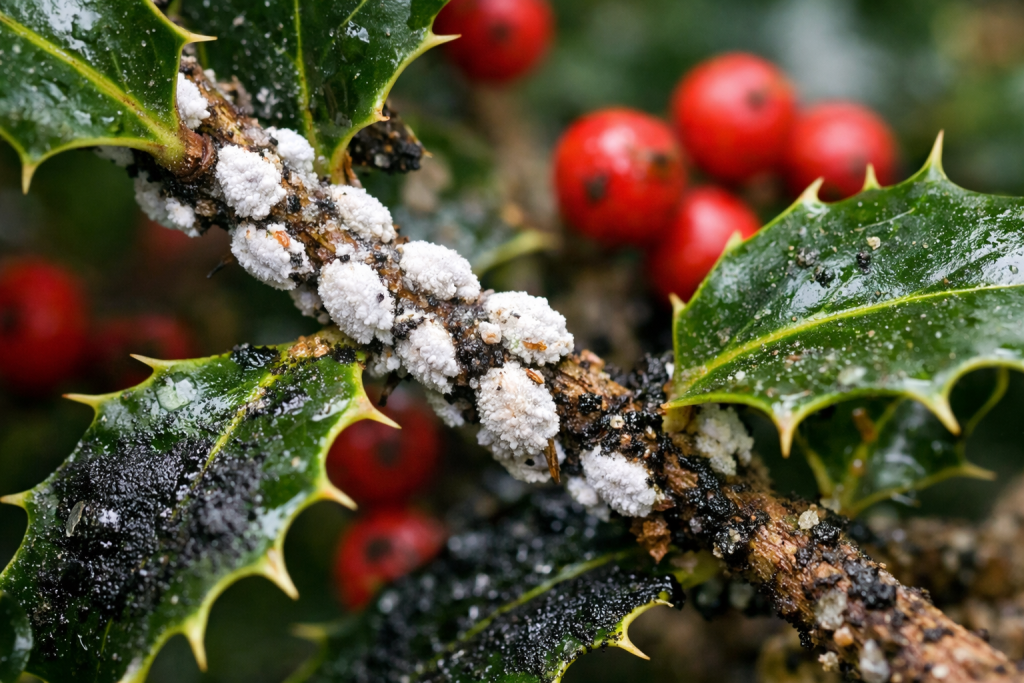
A similar type of scale insect is also commonly found on holly trees, causing the same sticky residue and black mold.
Best Treatment for Soft-Bodied Scale
The most affordable and effective treatment is applying dormant oil during winter, after the tree has dropped its leaves and gone dormant. Dormant oil works by smothering the scale insects before they become active in spring.
While dormant oil may not completely eliminate a heavy infestation, it greatly reduces the population early in the year, making the problem much easier to control during the growing season.
When to Call a Professional
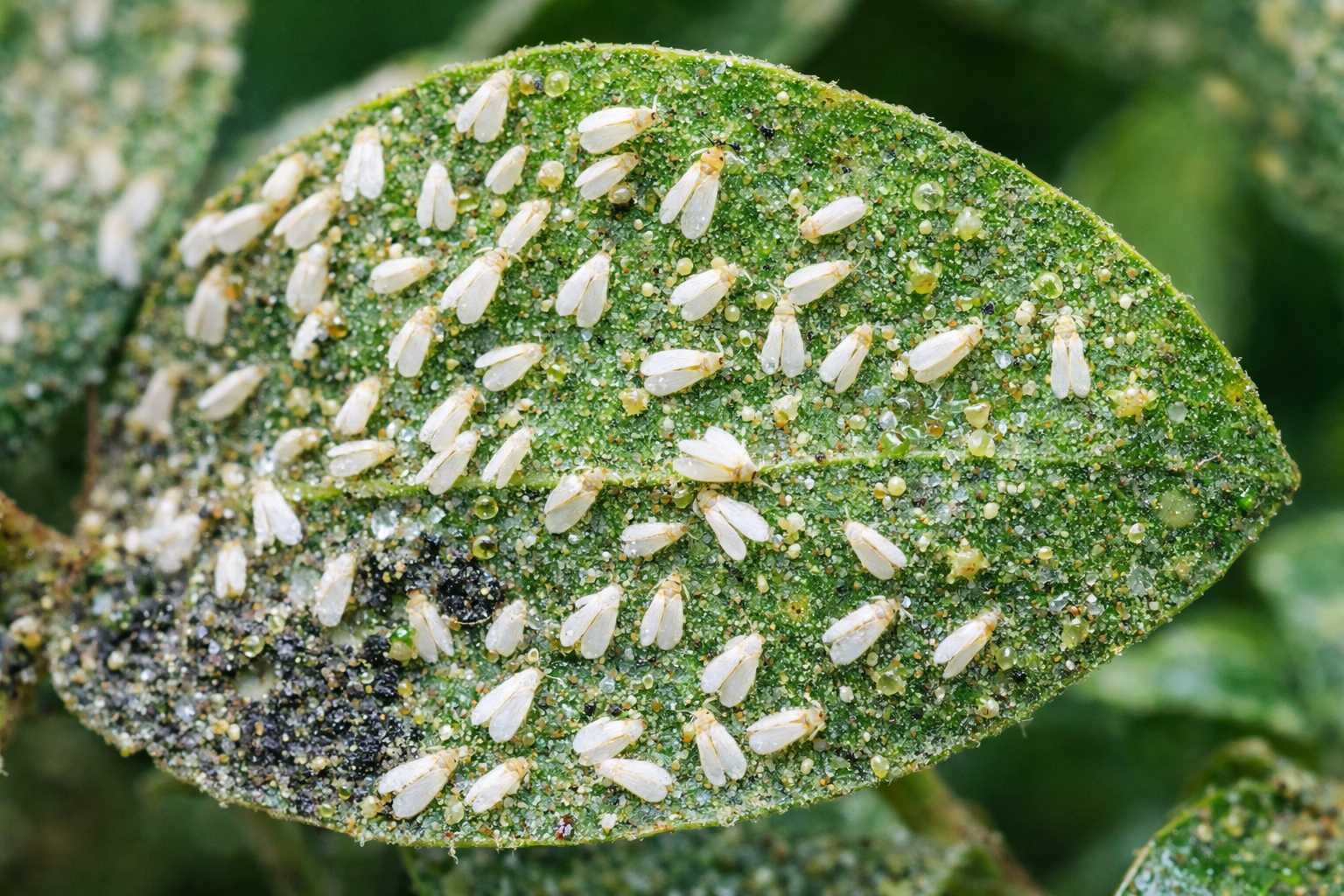
If you notice heavy scale buildup, black mold covering large areas, or ongoing problems year after year, professional treatment may be needed to protect the health of your trees and prevent spread to other plants.
Euonymus is easily taken over by another type of scale and must constantly be treated. However, dormant oils are a great way to reduce the pest population in the beginning of the year.
Mites
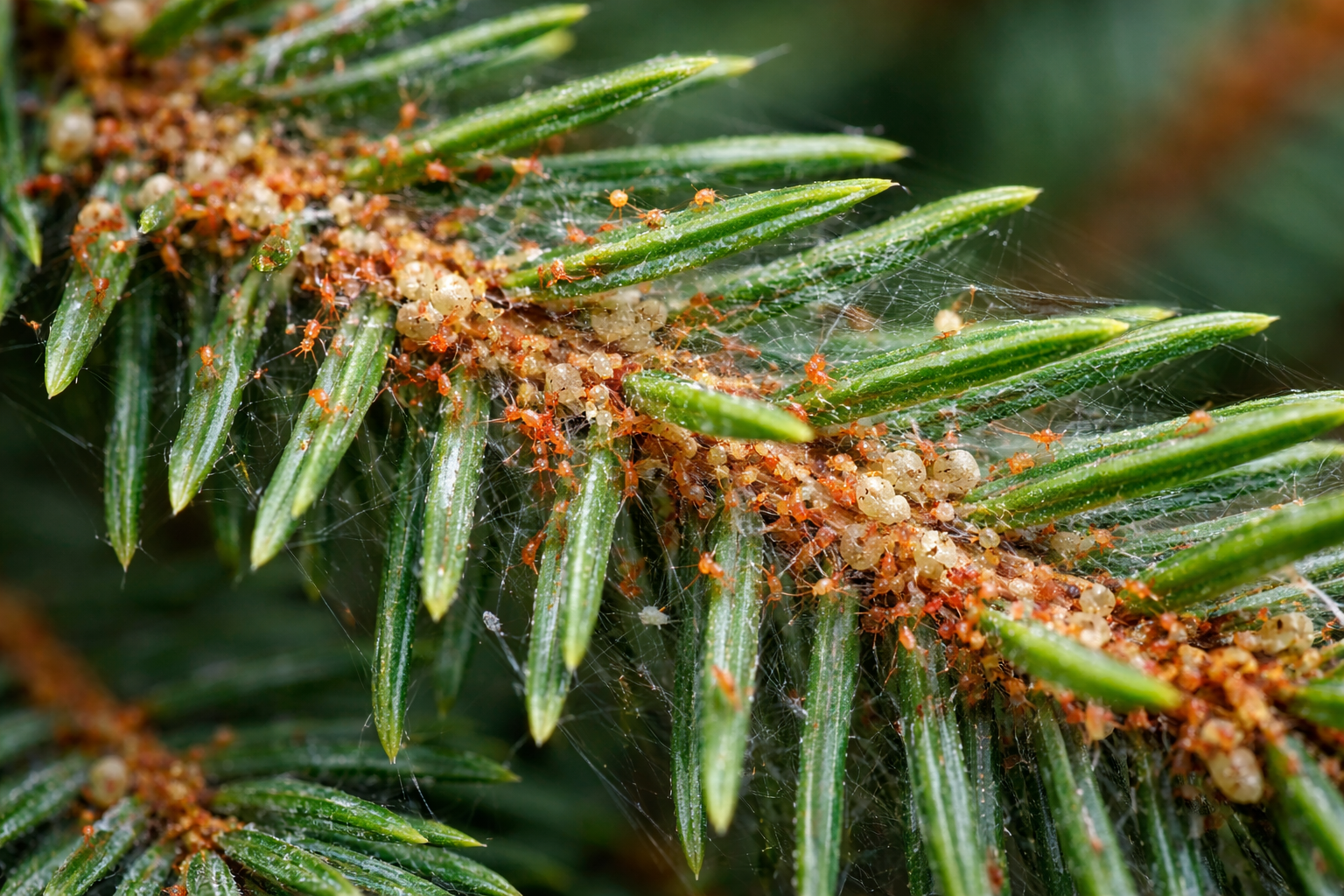
Many evergreens can have problems with mites. Here is a picture of a japanese cedar with false spider mites. You can see the problem starts at the tips and move back toward the branch. With both spider mites and false spider mites, the test for diagnosis is a simple one. Take a white sheet of paper and hold it below the branch’s affected area. Then simply shake the branch. Afterwards, watch the paper for any movement of the particles that landed on the paper. Spider mites tend to be black and will move shortly after they land on the paper. False spider mites (brownish) will move but might require more patience. So watch for 20 or 30 seconds to be sure.
Aphids
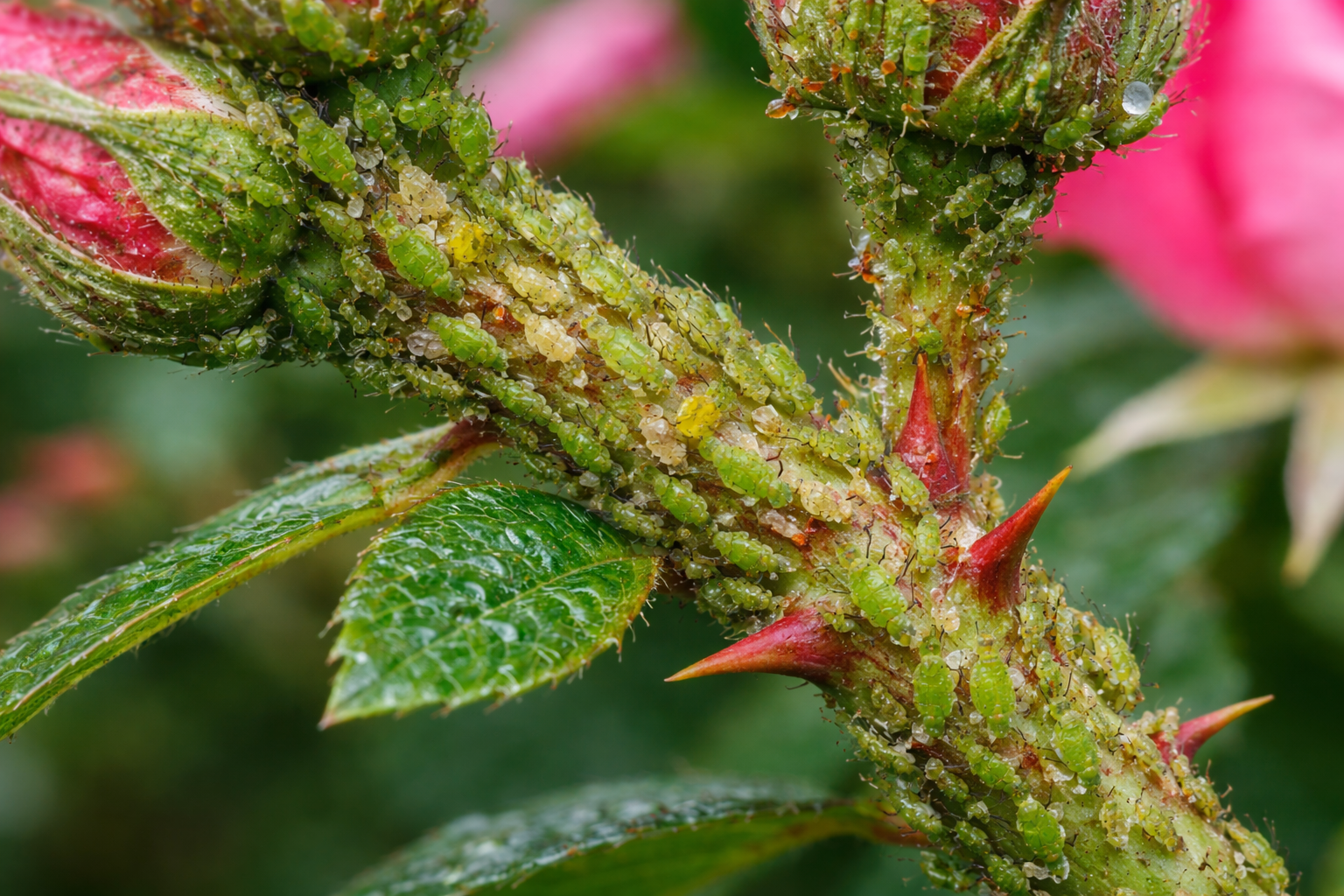
Roses can benefit for dormant oils to reduce aphid populations. Aphids attack roses early spring on new, tender growth. These pests have piercing and sucking mouthparts that do damage by sucking out the plants sap causing them to wilt.
In conclusion, for pest control on many of our shrubs in the Memphis area, dormant oils give your the biggest bang for your buck. They are cheap and safe for beneficial insects, birds, and mammals. It is the most environmentally friendly pest control you can do! You can pick up dormant oil at most hardware stores or garden centers. I always like to suggest my friends at Urban Earth in Midtown Memphis or Germantown Hardware in Germantown, TN. If you don’t want to do it on your own, we would love to give you an estimate!