The Challenge
Memphis Landscapes Face Constant Pressure
Trees and shrubs are a major investment in your landscape, but in the Memphis area they face constant pressure from insects, fungal diseases, heat stress, and humidity. Without proper maintenance, the health and appearance of landscape plants can decline quickly.
Our program is designed to protect common Mid-South trees and shrubs from damaging pests and plant-based diseases while supporting strong root systems.
How We Do It
Our Approach
Disease Prevention & Treatment
Fungal diseases thrive in the warm, humid Mid-South climate. Safari Lawn Care uses properly timed treatments to help prevent fungal spread.
Targeted Pest Control
Insects such as aphids, mites, scale, and borers can damage leaves, stems, and roots. Treatments applied directly to affected plants.
Early Detection & Monitoring
Many problems begin before visible damage appears. We monitor plant health throughout the season, allowing issues to be identified early.
Seasonal Maintenance
Trees and shrubs require care at the right time of year. Our seasonal plans are designed around Memphis growing conditions.
The Plan
Annual 4-Treatment Schedule
Treatment #1
Dormant oil applications prevent overwintering pests by suffocating insects and eggs before spring emergence.
Treatment #2
Pre-emergent treatments, plus systemic insect and disease control, bed weed spraying, and iron treatments for early-season plant health.
Treatment #3
Targeted family- and pet-safe fungicides and insecticides applied as needed to control diseases and insects during the growing season.
Treatment #4
Fall fertilization to strengthen root systems and prepare plants for winter dormancy. Post-emergent weed control.
What We Treat
Named Pests on Memphis-Area Ornamentals
The common problems we actually diagnose and treat on Mid-South landscapes — by name, not by vague category:
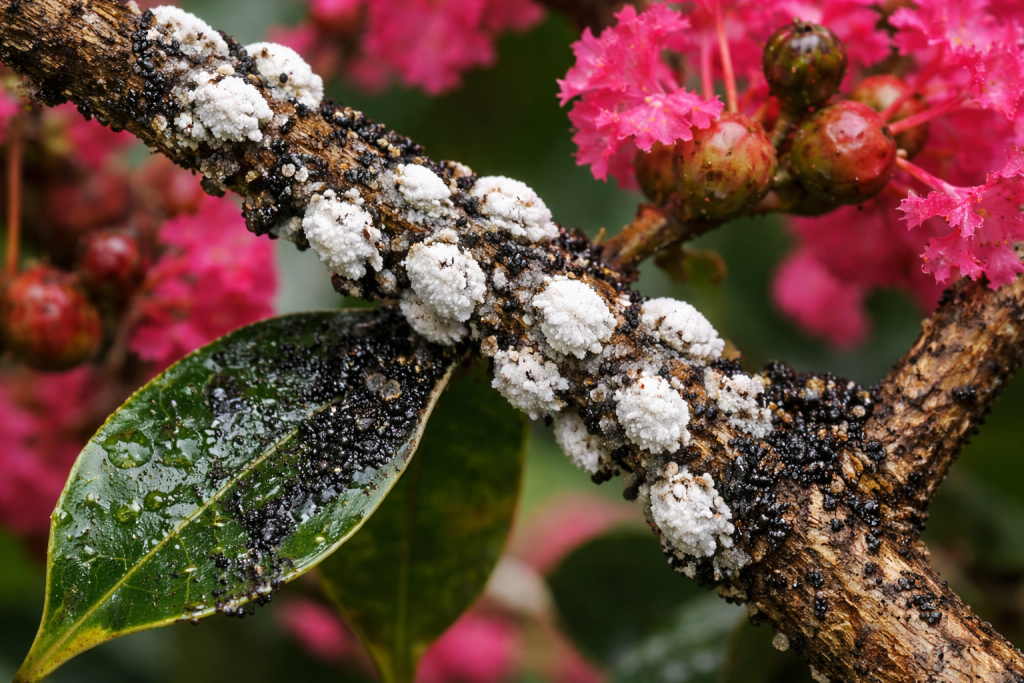
- Crape myrtle bark scale — endemic in Germantown, Collierville, and Bartlett since ~2013. Black sooty mold on bark, honeydew on understory plants. Dormant oil + systemic protocol.
- Azalea lacebugs — stippled yellow leaves on azaleas and rhododendrons through summer. Foliar systemic treatment.
- Japanese beetles — peak mid-June to mid-July on crape myrtles, roses, Japanese maples, linden, grapes. Systemic treatment at bud break.
- Spider mites — on junipers, arborvitae, spruce, boxwood during hot dry stretches. Miticide rotation during pressure windows.
- Scale on hollies, camellias, magnolias — tea scale and euonymus scale require dormant oil plus growing-season systemic.
- Aphids — on maples, tulip poplars, crape myrtles, roses. Often resolves with systemic; foliar if severe.
- Bagworms — on arborvitae, junipers, cedars. Treatment window is narrow (mid-May to mid-June before bags harden).
- Powdery mildew, leaf spot, entomosporium — common on dogwoods, photinias, red tip, hydrangeas in humid summers.
- Borers on stressed trees — ambrosia beetles on ornamental cherries, plums, and stressed oaks.
Common Questions
Frequently Asked Questions
Do you treat crape myrtle bark scale in the Memphis area?
Yes. Crape myrtle bark scale has been established in the Memphis metro since roughly 2013 and is now endemic in Germantown, Collierville, Bartlett, and Cordova. Our treatment protocol is dormant oil in late January to suppress overwintering scale, followed by a soil-applied systemic insecticide in early spring for season-long root uptake. Visible black sooty mold on bark typically clears within one full growing season.
When should dormant oil be applied in Memphis?
Late January through mid-February — after the coldest weeks have passed but before bud break. Application windows shift with weather, so we schedule by conditions rather than a fixed date. Dormant oil suffocates overwintering scale, mites, and aphid eggs before spring emergence.
How much does tree and shrub care cost in Memphis?
The standard Safari tree and shrub program is 4 treatments per year, typically $95–$180 per visit depending on number and size of ornamentals. Programs include dormant oil, systemic insect control for scale, fungal disease treatments, and mite and lacebug suppression. Estate landscapes with many mature ornamentals are custom-quoted.
What pests are common on Memphis-area ornamentals?
The most common ornamental pests in the Memphis metro are crape myrtle bark scale, azalea lacebugs, Japanese beetles on roses and crape myrtles, spider mites (especially on junipers and arborvitae), scale on hollies and camellias, aphids on maples and tulip poplars, and bagworms on evergreens. Fungal issues include powdery mildew, leaf spot, and entomosporium on photinias and red tip.
Do tree treatments harm beneficial insects?
Systemic insecticides are applied to the plant itself (soil drench or trunk injection), so exposure to non-target insects is minimized. Foliar treatments are used selectively on targeted pests. We do not make broadcast insecticide applications across the whole landscape.
Can a damaged tree recover with treatment?
Most scale, mite, and aphid damage is recoverable if treatment begins before the tree is under sustained stress for more than one growing season. Disease-driven decline (vascular wilts, root rot) has a lower recovery rate — early intervention matters. A technician will evaluate before committing to a treatment plan.
Is tree and shrub service separate from lawn care?
Yes. Tree and shrub maintenance focuses on ornamentals and woody plants and is priced separately from turf (lawn) programs. Most Safari customers run both programs together, which keeps the whole landscape on a coordinated schedule.